
How many units do you need?
Start with headcount and hours, not guesswork. OSHA 1926.51(c) sets construction site ratios: one toilet for 20 or fewer workers, then one toilet and one urinal per 40 workers once you pass 20, scaling to one per 50 at 200 or more. A farm crew doing hand labor falls under a different rule, OSHA 1928.110, which calls for one facility per 20 workers within a quarter mile walk. Events run differently since guests do not use restrooms on a schedule the way a crew does; for those, lean on how many porta potties do I need rather than a straight worker ratio. If you are staffing a wedding or festival near Meads, check event restroom rental and festival restroom rental for guest-count guidance instead. A crew supervisor in Meads still has to hit the OSHA number even for a two-week punch list, so do not round down. Confirm your count before you call, and review OSHA portable toilet requirements if the job spans multiple trades sharing one site.
What type of unit should you rent?
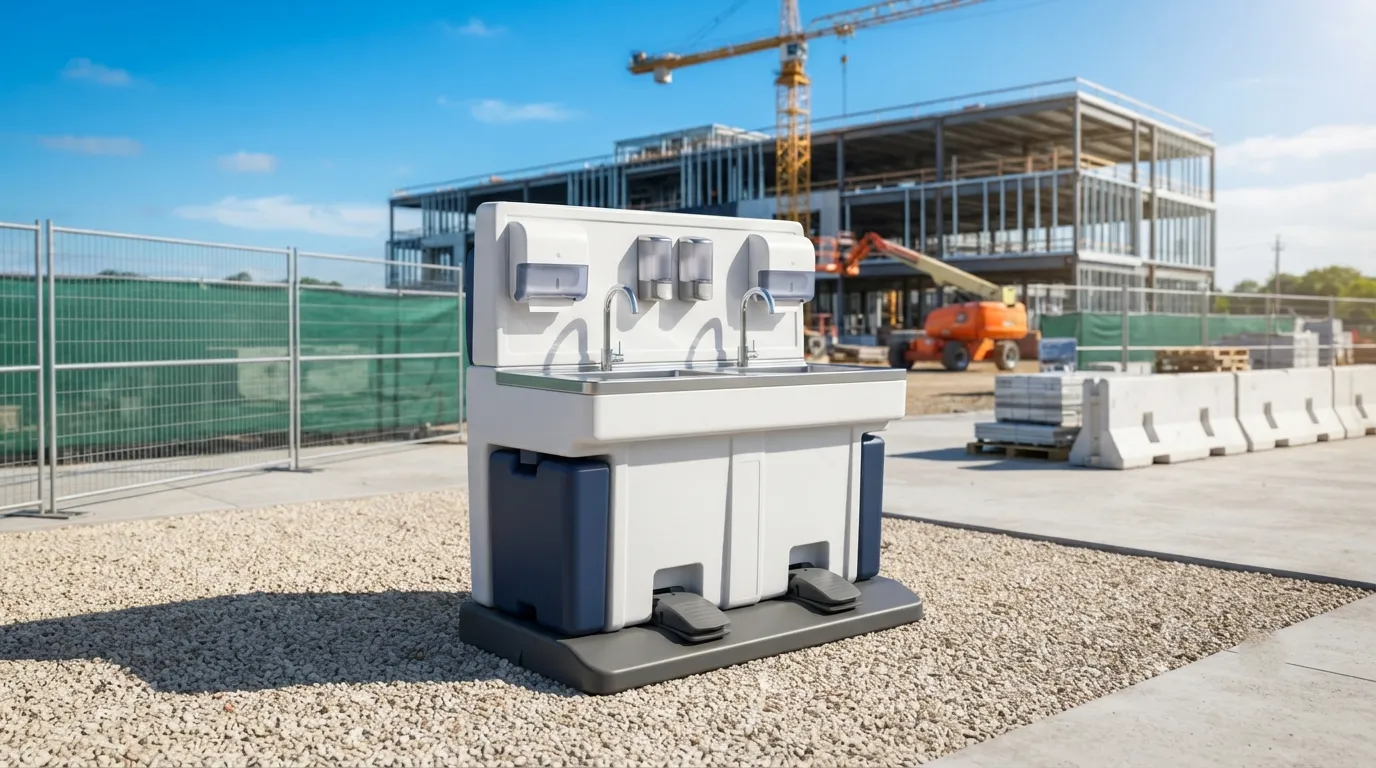
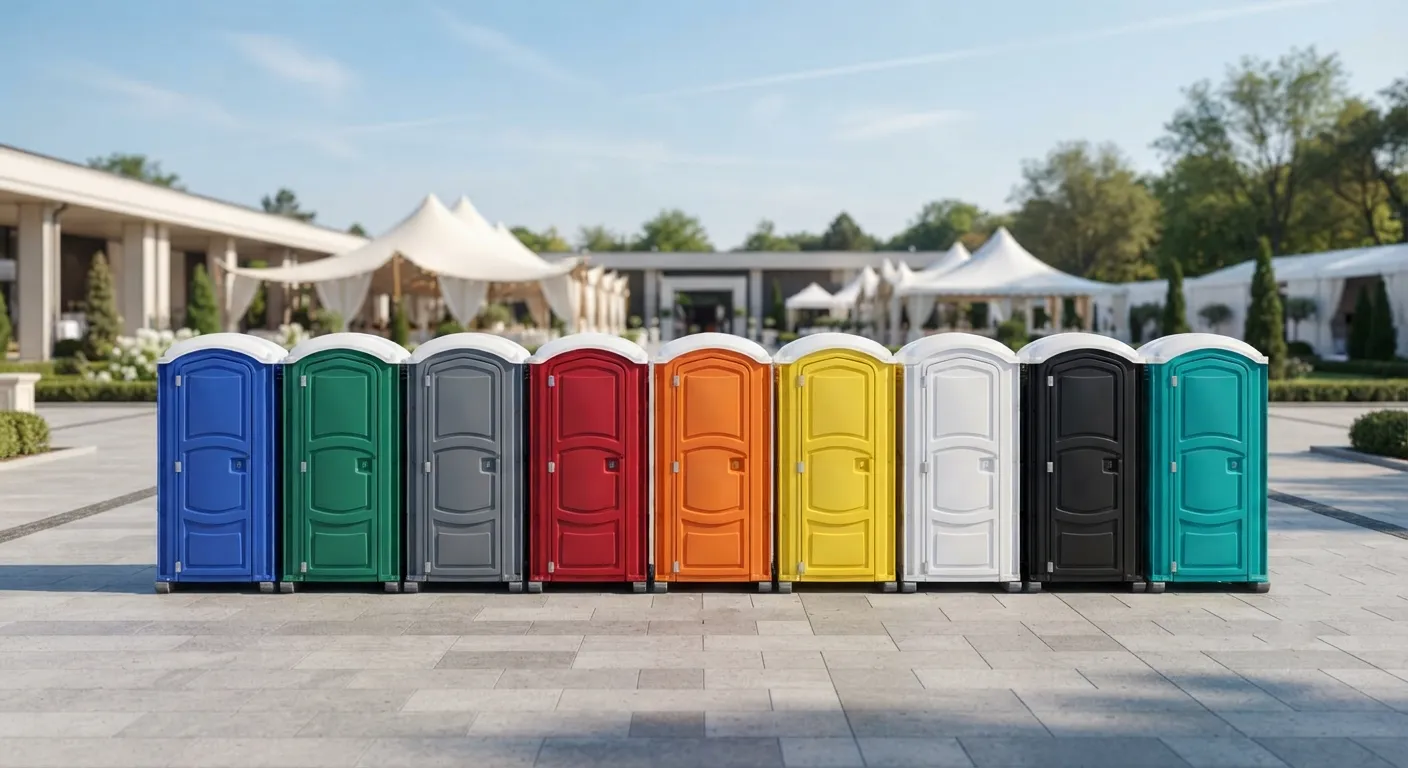
Match the unit to the job, not the budget alone. A standard porta potty rental carries a 60 to 70 gallon holding tank and sits about 44 by 48 inches on the ground, standing roughly 92 inches tall, which fits most job site corners in Meads without crowding a walkway. For staff meetings, client walk-throughs or a wedding party, step up to a deluxe flushable porta potty or a full restroom trailer rental with multiple stalls, sized as a 2 stall restroom trailer, 4 stall restroom trailer or 8 stall restroom trailer depending on guest count. Every cluster of standard units also needs an ADA accessible porta potty worked into the layout, since ADA Standards section 213.2 requires at least 5 percent of clustered single-user units to be accessible, and never fewer than one. If wash-up matters for your crew, pair the toilets with a unit from handwashing station rental rather than assuming a jug of sanitizer covers it.
Where should units be placed on site?
Placement decides whether the truck can even reach the tank. A roll-off or vacuum truck needs about 60 feet of straight clearance behind it to service the unit, so measure your access lane in Meads before delivery day, not after the truck is stuck. The ADA unit needs its own clear path too: ADA Standards section 403.5.1 calls for a 36 inch clear route, the door opening itself needs 32 inches under section 404.2.3, and the unit needs a 60 inch turning circle inside per section 304.3.1. Ground under and around the unit should be stable and slip resistant per ADA Standards section 302.1, which matters on a graded lot after rain. For full spacing rules, read the porta potty placement guide. If the unit sits anywhere near a public sidewalk or right of way in Meads, placement in that zone needs confirming with the city directly; check porta potty permit requirements before you commit to a spot. Sites running fencing around the perimeter should coordinate gate placement with temporary fence rental so the accessible route stays clear.
How often does service need to happen?
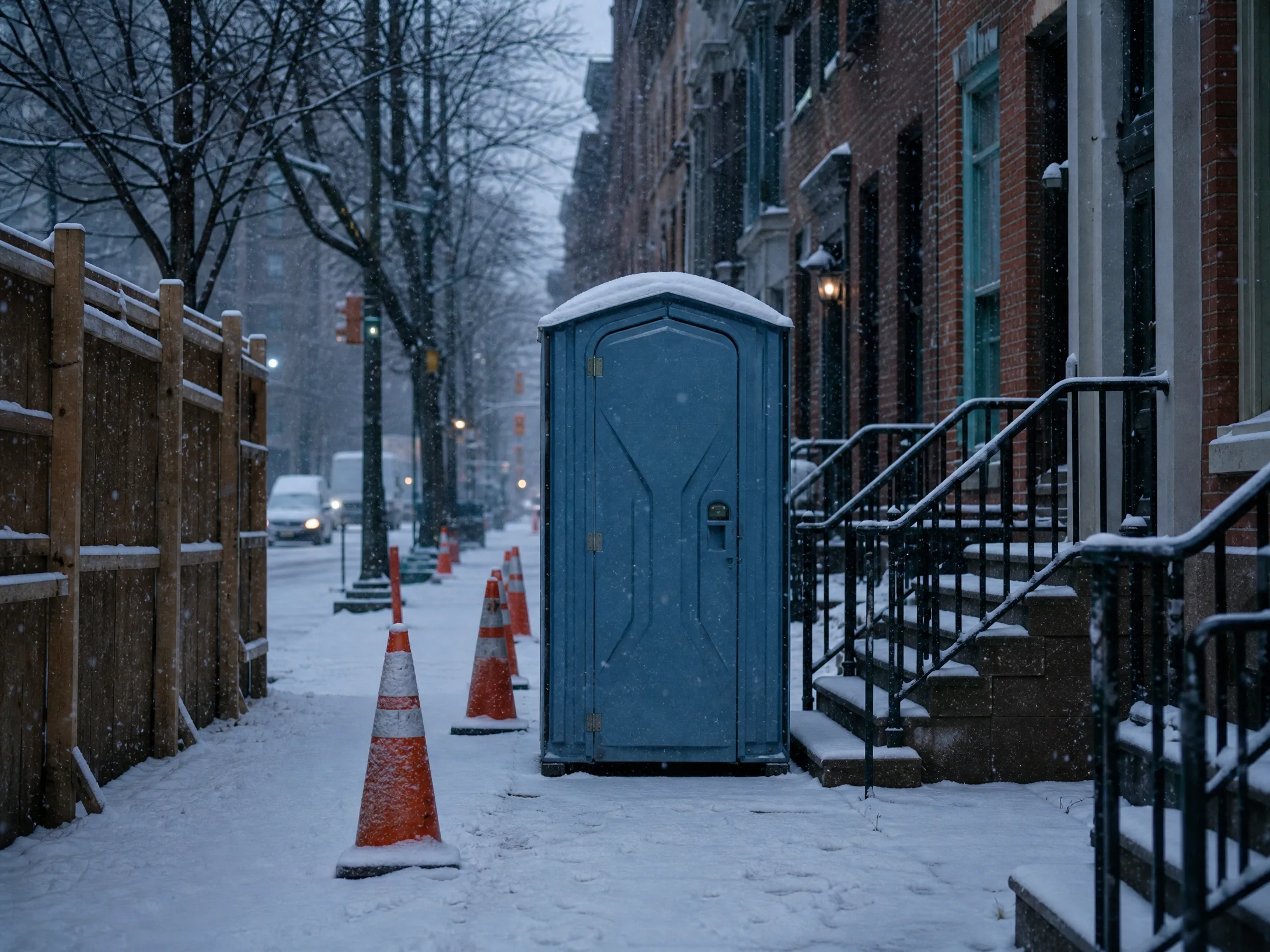
Weekly is the floor, not the ceiling. ANSI/PSAI Z4.3, the industry service standard, sets one visit per week as the baseline for up to 10 users across a 40 hour week, and a busy site or event in Meads will need more. Long-haul rentals should get scheduled through monthly porta potty rental so service dates are locked in up front instead of negotiated mid-job. For septic-fed sites, a typical 1,000 gallon residential tank gets pumped every 3 to 5 years depending on household size and tank capacity, a detail worth checking against how often to pump a septic tank. Restaurants and event caterers near Meads should also track grease buildup, since a grease interceptor needs pumping once fats, oils, grease and solids hit 25 percent of the liquid depth; see grease trap pumping for that schedule. Handwashing stations need real soap and a drying method under 29 CFR 1910.141(d)(2), since sanitizer alone does not satisfy that rule, and if your crew is spraying paint or pesticide, OSHA 1926.51(f)(1) requires washing facilities for that specific exposure.
Meads Porta Pros can walk your site plan against every item above before delivery day, and pricing for the unit types mentioned here is broken down on porta potty rental cost and porta potty rental per day.
How far in advance should I book a porta potty in Meads?
Book as soon as your site plan or event date is set. Weekend and holiday demand tightens fast, and trailer units in particular book out further than standard units. Confirm headcount, placement and service frequency before calling to avoid a second call to change the order.
Do I need a permit for a porta potty in Meads?
That depends on where the unit sits. Placement on private property is usually straightforward, but anything touching a public sidewalk or right of way needs confirming with the city directly. See porta potty permit requirements before delivery day to avoid a relocation fee.
What is the difference between a standard unit and an ADA unit?
An ADA unit has a wider door opening, a 60 inch turning circle inside per ADA Standards 304.3.1, and grab bars positioned for wheelchair users. A standard unit is smaller and cheaper but does not meet ADA Standards section 213.2 clustering requirements on its own.
Can I rent just one porta potty for a weekend event?
Yes, single-unit weekend rentals are common for small gatherings. Match unit type to guest count using how many porta potties do I need, and confirm delivery access ahead of time since even one unit needs clearance for the service truck.
Does a construction site legally need more than one toilet?
It depends on crew size. OSHA 1926.51(c) requires one toilet for 20 or fewer workers, scaling up as headcount grows. A two-person punch list crew and a forty-person framing crew fall under very different ratios, so recount before every phase change.
Next step
Get a delivery date
Tell us the address, the dates and the headcount. We size the order and confirm the route.