
How Do Porta Potties Work?
The setup is simple: a seat sits over a sealed holding tank, and that is the whole system. There is no flush, no water line, no pipe running anywhere. Waste drops into the tank, where a blue chemical deodorizer breaks down solids and knocks back odor between services. That is the same principle whether you rent a standard porta potty for a job site or a unit for a backyard party. A standard unit runs about 44 by 48 inches on the ground and stands roughly 92 inches tall, so it fits tight side yards and job trailers without much fuss. ANSI/PSAI Z4.3, the portable sanitation service standard, sets a baseline of one service visit per week for up to 10 users across a 40 hour week. That is why a construction worker running to a porta potty on a Meads job site usually finds a serviced, stocked unit even on a five day pour schedule. Crews wanting the exact math for their headcount should check how many porta potties you actually need before ordering.
How Do Flushable Porta Potties Work?
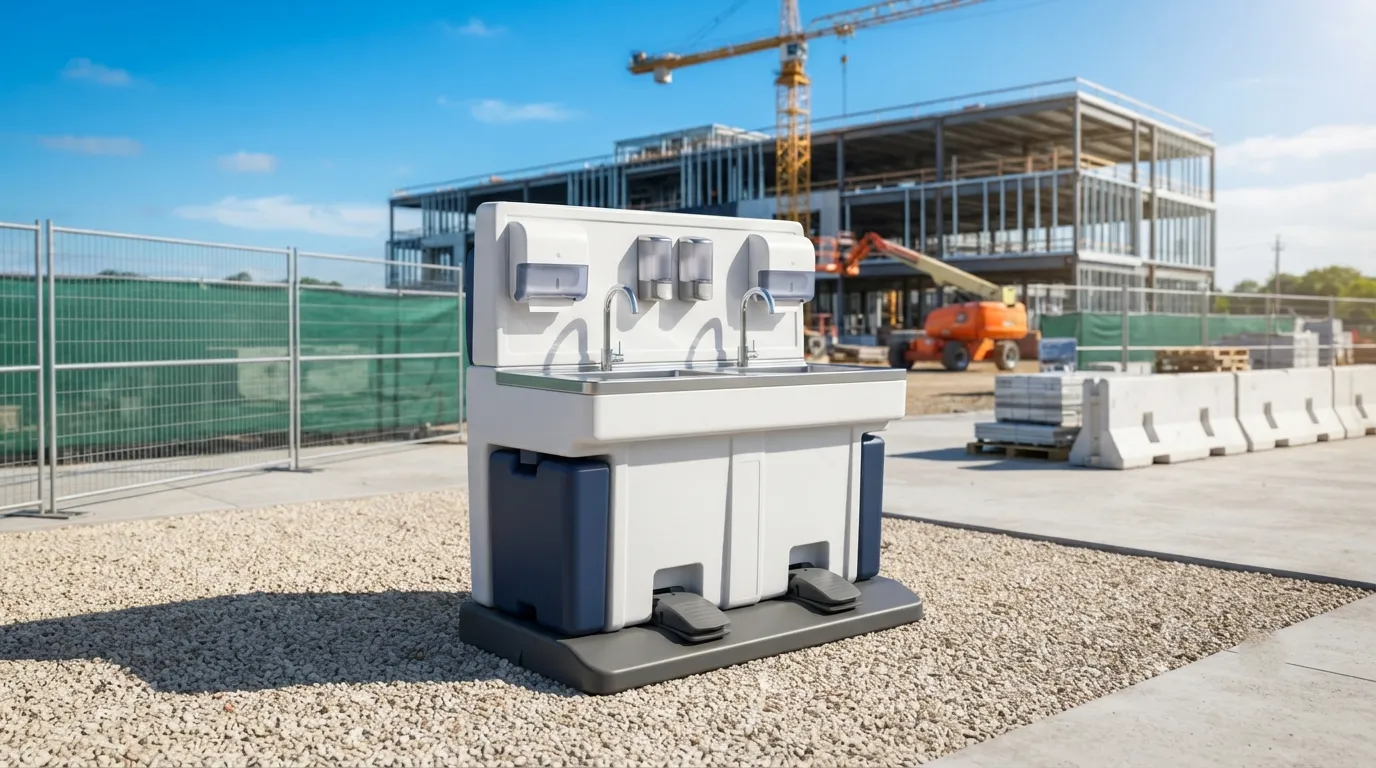
A deluxe flushable porta potty adds a small onboard freshwater tank and a foot pump or pressurized flush that rinses the bowl into the same holding tank below. It still is not plumbed into a sewer line. It just recycles a small reservoir of water instead of relying on chemical breakdown alone, which cuts odor further and feels closer to a home bathroom. These units cost more than a standard rental but make sense for weddings and long events where guests notice the difference. Portable sinks work on a similar idea: a foot pump or hand crank draws from a fresh water tank into the faucet, and gray water drains into a separate holding tank underneath. That is the same logic behind handwashing station rental and portable sink rental setups on food vendor sites and farm operations around Meads. Under 29 CFR 1910.141(d)(2), washing facilities need soap and towels or a hand-drying device. Hand sanitizer alone does not satisfy that standard, which is why sink rentals still matter even when a sanitizer station is also on site.
Why Do Job Sites Need Porta Potties?
OSHA 1926.51(c) sets the ratio: one toilet for 20 or fewer construction workers, then one toilet seat and one urinal per 40 workers as headcount climbs past 20, and per 50 once a site hits 200 workers. That is not optional paperwork. It is the baseline a Meads job site has to hit before an inspector ever shows up. Farms hiring hand-labor crews fall under a different rule, OSHA 1928.110, which calls for potable water, toilets and handwashing within a quarter mile walk of the workers, one facility per 20 people. That is worth knowing for anyone planning farm and agricultural restrooms rather than a standard building site. General contractors juggling multiple trades on one lot often bundle porta potties with temporary fencing, a light tower, and a roll-off dumpster so the whole site services stack shows up on one delivery. For a full breakdown of what OSHA actually requires by crew size, see OSHA portable toilet requirements.
How Do Camping Porta Potties Work?
Camping and event units run the same tank-and-chemical system as a job site unit, just scaled for foot traffic instead of a fixed crew. A weekend event near Lyndon, 1.9 miles southwest of Meads, or a gathering out toward Anchorage, 3.0 miles east, still needs the same service math: more users means shorter intervals between pump-outs, not a bigger tank. That is where event restroom rental planning differs from a construction quote. Standard units for weekend events typically run in a different pricing tier than a weekday jobsite rental, since porta potty rental per day pricing and weekend event pricing follow separate demand curves. Anyone hosting a festival, marathon or fair should look at festival restroom rental or marathon and race restrooms guidance rather than assume a job-site quote transfers directly.

Pricing by rental length
| unit | day | week | month |
|---|---|---|---|
| standard | $100-$350 | $130-$500 | $125-$325 |
| ada | $200-$400 | $240-$400 | - |
| deluxe | $85-$1200 | $150-$290 | - |
A weekend standard rental in Meads typically lands between $125 and $400 depending on unit count and add-ons. Full detail on how these numbers shift by duration lives on porta potty rental cost and monthly porta potty rental.
What chemical goes in a porta potty?
Service techs use a blue deodorizing chemical designed for portable toilet tanks, formulated to break down waste and mask odor between pump-outs. It is not the same product used in septic tank cleaning, and Meads Porta Pros techs do not substitute household chemicals. For questions on tank additives for a home system, see septic tank cleaning.
Do porta potties smell bad?
A well-serviced unit should smell faintly chemical, not foul. Odor spikes usually mean it is overdue for a pump-out or the vent is blocked. Full explanation of servicing intervals and what drives smell is on do porta potties smell.
How often are porta potties cleaned?
ANSI/PSAI Z4.3 sets a one-visit-per-week baseline for up to 10 users across a 40 hour week, though high-traffic events need more frequent service. Details on how Meads Porta Pros schedules routes are covered at how often are porta potties cleaned.
Are portable toilets ADA accessible?
Some are. ADA Standards section 213.2 requires at least 5 percent of clustered single-user units to be accessible, never fewer than one. An ADA accessible porta potty includes a 60 inch turning circle per section 304.3.1.
Can porta potties freeze in winter?
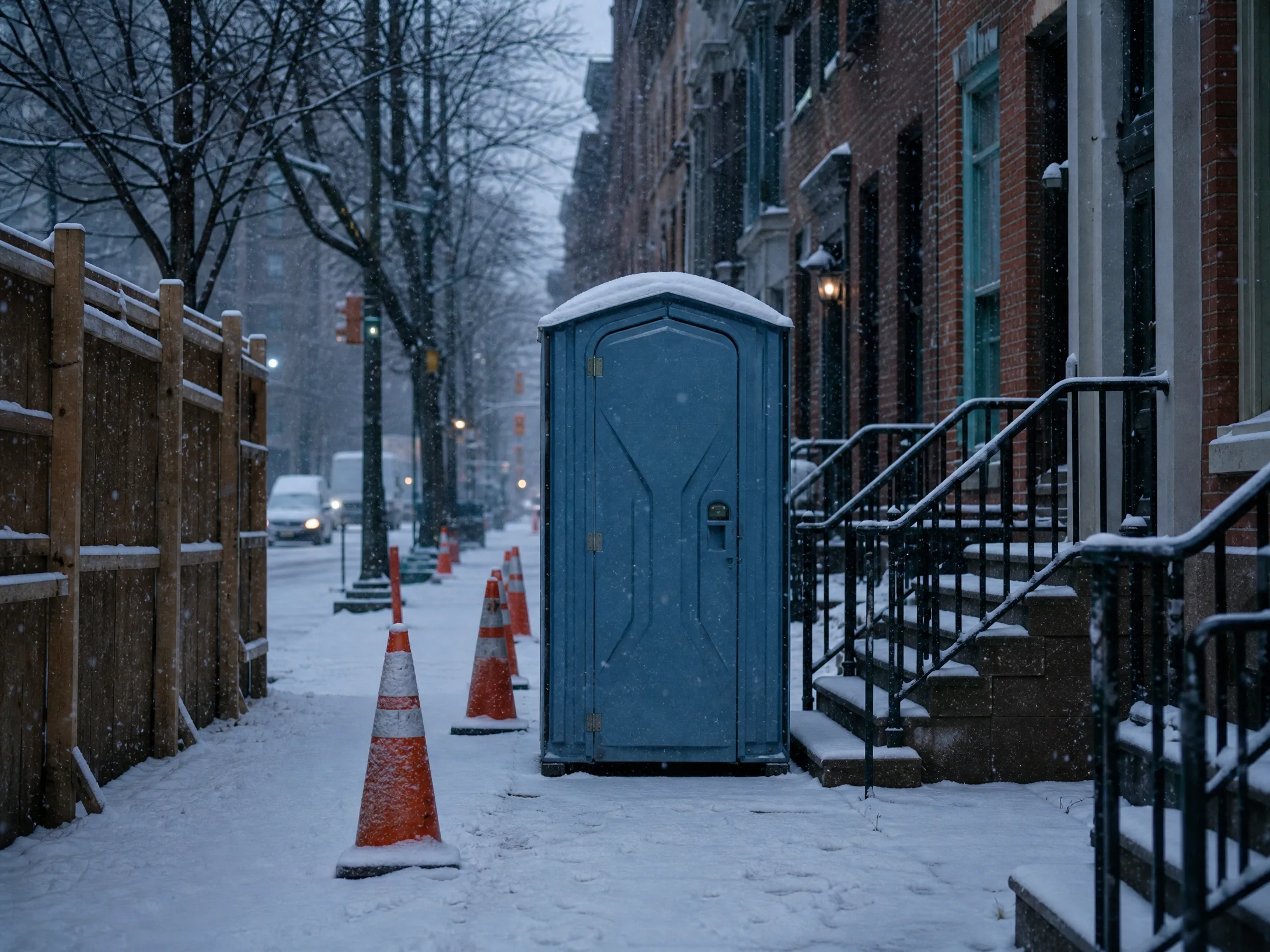
Yes, standing water in the tank and hand sanitizer can freeze in hard winter cold. Meads Porta Pros adjusts chemical mix and service frequency for cold months. See porta potty in winter for how that works.
Next step
Get a delivery date
Tell us the address, the dates and the headcount. We size the order and confirm the route.